
Quick Summary
A root canal of molar teeth is often recommended when infection or inflammation reaches the pulp inside a back tooth. Because molars contain multiple roots and complex canal systems, treatment can be more involved than procedures performed on front teeth. The process removes infected tissue, disinfects the canals, and seals the tooth to prevent future problems. Many patients also receive a crown afterward to strengthen the tooth. Prompt treatment helps relieve pain, preserve natural teeth, maintain chewing function, and reduce the risk of infection spreading to surrounding tissues.
Pain in a back tooth can make simple tasks such as eating, speaking, and sleeping difficult.
In many cases, the problem extends beyond a cavity and reaches the inner portion of the tooth where nerves and blood vessels are located. When this happens, a root canal of molar teeth may be recommended to remove infection, relieve discomfort, and preserve the natural tooth.
Although molars have a more complex structure than front teeth, root canal treatment remains a common and effective solution that allows patients to maintain proper chewing function and avoid unnecessary tooth loss.
Why Molars Often Need Root Canal Treatment
Molars handle most of the chewing and grinding forces in the mouth. Their location and function make them more vulnerable to wear, decay, and damage over time.
Unlike front teeth, molars contain multiple roots and several root canals. Food particles and bacteria can become trapped in the grooves of these teeth, increasing the likelihood of cavities. As decay progresses deeper into the tooth, bacteria can reach the pulp and cause infection or inflammation.
Trauma, cracks, large fillings, and repeated dental procedures can also damage the pulp. Once the inner tissue becomes infected, treatment is often necessary to save the tooth and prevent the infection from spreading.
Understanding the Root Canal Process
Many patients hear the term root canal procedure and immediately associate it with discomfort. Modern dentistry has changed that perception significantly.
Treatment begins with a detailed examination and dental imaging to evaluate the extent of infection and the anatomy of the tooth. Local anesthesia is then used to numb the area, helping patients remain comfortable throughout the appointment.
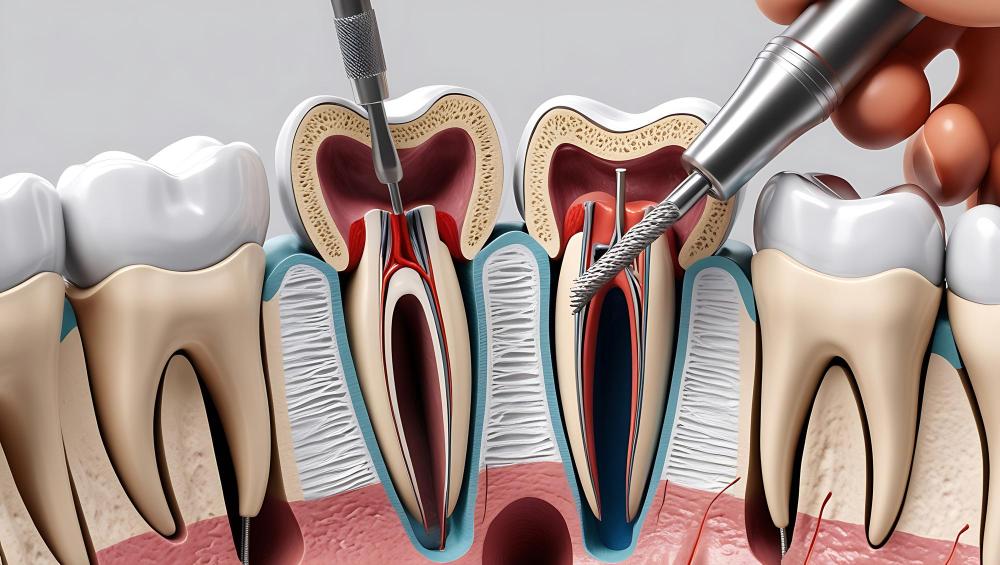
A small opening is created in the tooth, so the infected pulp can be removed. The dentist carefully cleans and disinfects the canals before shaping them for filling. Once the canals are free of bacteria and debris, they are sealed with a biocompatible material designed to prevent reinfection.
Why Molars Are More Complex Than Other Teeth
The anatomy of molars presents unique challenges during treatment. Front teeth usually contain one root canal, while molars often contain three or more canals that branch in different directions.
These canals can be narrow, curved, and difficult to access. Advanced imaging and modern techniques help dentists locate and treat these spaces with greater accuracy.
Because of this complexity, treatment for molars may require more time than procedures performed on front teeth. Preserving the natural tooth is often the preferred approach because molars play such an important role in daily function.
How Long Does Treatment Take?
One of the most common questions patients ask is about how long a root canal takes.
The answer depends on several factors, including the number of canals, the location of the tooth, and the severity of the infection. Some molar root canals can be completed during a single appointment, while others may require two visits.
The overall treatment timeline may also include a follow-up restoration after the root canal has healed. Your dentist can give a more precise estimate based on the condition of the affected tooth.
Why a Crown Is Often Recommended
After root canal therapy, the tooth no longer contains living pulp tissue. Although the tooth remains functional, it can become more vulnerable to fractures over time.
For this reason, many patients receive a crown after a root canal procedure. A crown covers the entire visible portion of the tooth and helps restore strength, stability, and normal chewing function.
Molars absorb significant bite forces every day. A properly fitted crown helps protect the treated tooth from damage and allows it to function comfortably for years.
Protecting Your Oral Health for the Future
Saving a molar whenever possible helps maintain proper bite alignment and chewing efficiency. Keeping natural teeth also reduces the likelihood of neighboring teeth shifting into empty spaces.
Regular dental examinations, good oral hygiene habits, and prompt treatment of cavities can help reduce the need for root canal therapy. When treatment is necessary, addressing the problem early often leads to better long-term outcomes.
At Dr. Alex Rubinov’s practice, we focus on preserving healthy tooth structure whenever possible. If you are experiencing pain in a molar or have been told you may need root canal treatment, contact us today to schedule an evaluation and discuss the most appropriate treatment options for your smile.
FAQs
Can a molar always be saved with a root canal?
Many infected molars can be saved with root canal treatment. The outcome depends on the extent of damage and the overall condition of the tooth.
Is a root canal on a molar painful?
Modern anesthesia allows most patients to remain comfortable during treatment. Many describe the experience as similar to having a dental filling.
Why do molars often need crowns after treatment?
Molars experience significant chewing pressure. A crown helps strengthen and protect the tooth after root canal therapy.