
Quick Summary
Understanding cavities vs. root canal treatment begins with recognizing that cavities are areas of tooth decay, while root canals treat infection inside the tooth’s pulp. Early cavities often require only fillings, but untreated decay can spread deeper and create the need for root canal therapy. Symptoms such as persistent pain, swelling, and prolonged sensitivity often indicate a more advanced problem. Regular dental visits and prompt treatment help preserve natural teeth, reduce discomfort, and prevent small issues from developing into more complex dental concerns.
Tooth pain can be difficult to interpret because different dental problems often produce similar symptoms.
Many patients researching cavities vs. root canal treatment assume both terms describe the same issue, but they refer to very different stages of dental damage. A cavity is an area of decay that affects the outer structure of a tooth, while a root canal addresses infection within the tooth’s inner pulp.
Understanding the distinction can help you seek treatment sooner, avoid unnecessary discomfort, and protect your long-term oral health before minor damage progresses into a more serious condition.
Understanding the Difference Between Cavities and Root Canals
A cavity is a damaged area of a tooth caused by bacteria, acids, and plaque buildup. As bacteria break down sugars from food and beverages, acids gradually wear away tooth enamel. Over time, this process creates small holes in the tooth.
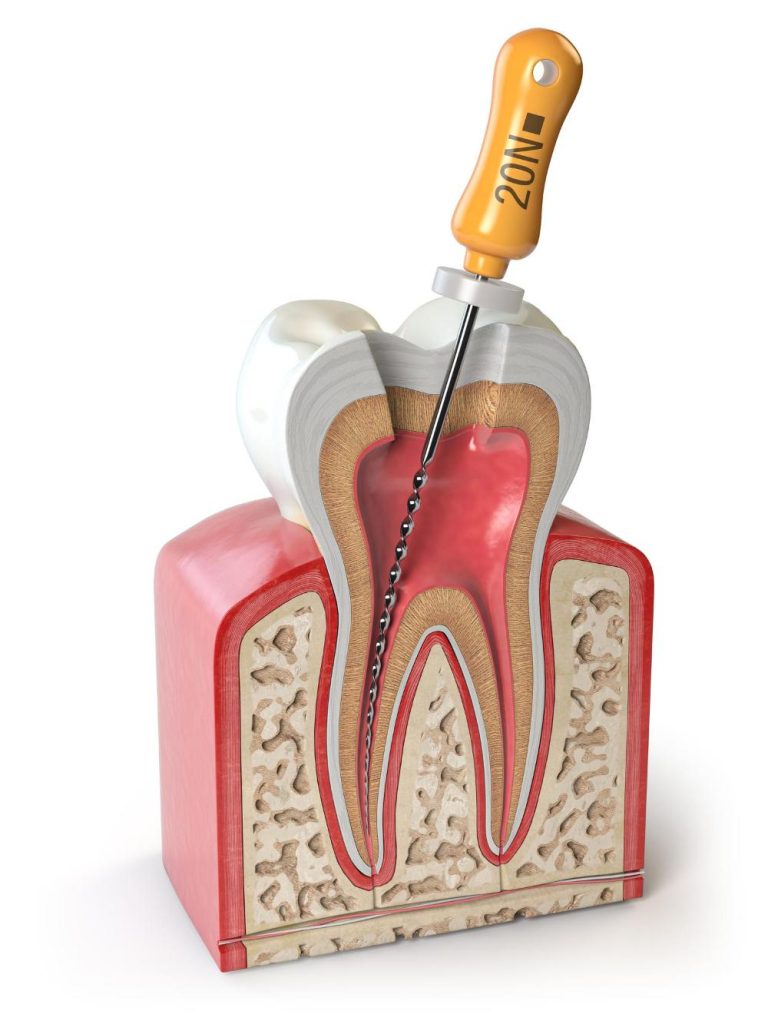
A root canal is not a dental condition. It is a treatment used when decay or infection reaches the pulp, the soft tissue inside the tooth that contains nerves and blood vessels. While cavities represent the problem, a root canal is often the solution when that problem advances.
How Cavities Develop
Cavities typically begin when plaque remains on the teeth for extended periods. The bacteria within plaque produce acids that weaken enamel and create areas of decay.
At first, a cavity may cause no symptoms at all. As it grows deeper, patients may notice:
- Mild sensitivity to hot, cold, or sweet foods
- Discomfort when eating certain foods
- Visible dark spots on the tooth
- Food becoming trapped in affected areas
When diagnosed early, cavities are often treated with a simple filling. The decayed portion of the tooth is removed, and the area is restored to prevent further damage.
When Does a Root Canal Become Necessary?
A root canal becomes necessary when bacteria penetrate beyond the enamel and dentin layers and reach the pulp chamber. Once infection develops inside the tooth, a filling alone can no longer resolve the problem.
Common signs that may indicate the need for a root canal procedure include:
- Persistent tooth pain
- Severe sensitivity that lingers after eating or drinking
- Pain when chewing
- Swollen gums near the affected tooth
- Tooth discoloration
- A recurring pimple-like bump on the gums
Without treatment, the infection can spread further and may eventually result in tooth loss.
Symptoms That Help Distinguish the Two
One reason patients struggle with cavities vs. root canal concerns is that both conditions can cause sensitivity and discomfort.
However, the type of pain often differs.
Discomfort related to cavities tends to occur when eating sweets or consuming hot or cold beverages. The sensation usually disappears quickly after the trigger is removed.
A tooth requiring a root canal often causes deeper and more persistent pain. The discomfort may continue long after eating or drinking and can even interfere with sleep. Pressure while chewing frequently becomes more noticeable as the infection progresses.
What Happens During Treatment?
Cavity treatment is relatively straightforward. After removing the decayed tooth structure, the dentist places a filling to restore the tooth.
A root canal involves several additional steps. The infected pulp is removed, the inner canals are cleaned and disinfected, and the tooth is sealed to help prevent future infection.
Many patients ask how long a root canal takes. The answer depends on the location of the tooth and the complexity of the infection. Some cases can be completed in a single appointment, while others may require multiple visits.
Life After a Root Canal
Once treatment is complete, the tooth remains functional but no longer contains living pulp tissue. Because of this, the tooth may become more susceptible to fractures over time.
For many patients, a crown after root canal procedure treatment helps restore strength and function. The crown covers the treated tooth and protects it from damage during everyday chewing.
How Dr. Alex Rubinov Can Help
At Dr. Alex Rubinov’s practice, every tooth is carefully evaluated to determine the most appropriate treatment. From early cavity detection to advanced restorative care, the goal is to preserve healthy tooth structure whenever possible while restoring comfort, function, and the appearance of your smile.
Need expert dental care? Contact Dr. Alex Rubinov today to schedule an appointment and learn which treatment is right for your smile.
FAQs
Can a cavity heal without treatment?
Very early enamel damage may improve with fluoride, but an actual cavity cannot repair itself and typically requires professional treatment.
Does every cavity lead to a root canal?
No. Most cavities can be treated with fillings when detected early. Root canals are generally necessary only after infection reaches the pulp.
Is a root canal painful?
Modern root canal treatment is performed with local anesthesia, making the procedure much more comfortable than many patients expect.