
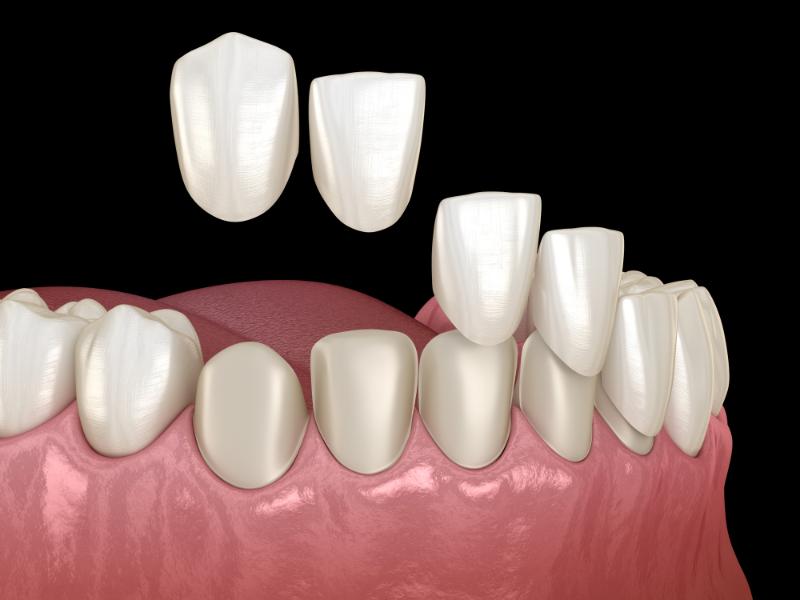
Transforming your smile with porcelain veneers is one of the most effective cosmetic dental treatments available. Whether you’re looking for a subtle improvement or a more dramatic makeover, the choice between full-mouth veneers and partial veneers can be difficult. Understanding the differences between these two options will help you select the solution that matches your needs, goals and lifestyle.
Dr. Alex Rubinov designs porcelain veneers in NYC from his office at 1 Rockefeller Plaza, and this is one of the first questions he answers at a consultation: how many teeth should be treated, and how much of each tooth should a veneer cover?
What Are Full Veneers?
Full veneers are designed to cover the entire front surface of a tooth. They are ideal for people dealing with significant discoloration, damage or worn-down enamel. The procedure typically involves removing a small portion of the natural enamel so the veneer fits securely. While this requires more tooth preparation, it results in a durable and natural-looking smile.
Benefits of Full Veneers
Full veneers are a long-lasting solution. They resist staining, and with proper care porcelain veneers can last between seven and 20 years. Covering the entire visible surface of the tooth creates a uniform, smooth appearance, which makes full veneers suitable for more severe imperfections. The results are often dramatic, restoring both the function and the beauty of the teeth.
I had 10 top Porcelain veneers done and I’m beyond happy with the results. My smile is perfectly straight now, wider and whiter.
Tiffany H., 5-star Google review
What Are Partial Veneers?
Partial veneers only cover specific parts of the tooth. They are typically used for smaller cosmetic issues such as chips, cracks or slight discoloration. Partial veneers require less tooth preparation, often with minimal enamel removal, which makes them a less invasive option for patients who want a subtle enhancement rather than a complete transformation.
Benefits of Partial Veneers
While partial veneers don’t provide the same coverage as full veneers, they still offer a real improvement for patients with minor imperfections. The process is quicker and less invasive. Their lifespan is generally shorter than full veneers, because of their limited coverage and the natural wear they endure.
Full Mouth or a Few Teeth? How Many Veneers Do You Need?
“Full mouth” and “partial” also describe how many teeth are treated. The right number depends on how many teeth show when you smile. If only the front few teeth are changed, the teeth next to them can look darker or narrower by comparison, which is why many patients treat every tooth that is visible in their smile.
In the video below, Dr. Alex compares a 4-veneer smile with a 10-veneer smile and explains why treating more of the visible teeth often creates a more balanced, natural result. You can also read our guide on how many veneers you need.
Which Is Right for You?
The decision between full and partial veneers depends largely on the condition of your teeth and your long-term goals. If you have severely damaged or discolored teeth that need comprehensive coverage, full veneers are likely your best option. They offer strength, longevity and an enhanced appearance.
For minor imperfections or a more subtle change, partial veneers may be a better fit. They enhance your smile with minimal disruption to your natural teeth. If you are only considering one or two teeth, see whether you can get veneers for just your two front teeth.
Frequently Asked Questions
What is the difference between full and partial veneers?
Full veneers cover the entire front surface of a tooth and are used for significant discoloration, damage or wear. Partial veneers cover only part of the tooth and are used for smaller issues such as chips, cracks or slight discoloration.
How many veneers do I need for a full smile?
It depends on how many teeth show when you smile. Dr. Alex looks at your smile width, tooth shade and the shape of your teeth at your consultation and recommends the number of veneers that will look natural next to the rest of your teeth.
Do partial veneers last as long as full veneers?
Usually not. Partial veneers cover less of the tooth and are exposed to more natural wear, so their lifespan is generally shorter than full veneers.
Does getting veneers require removing enamel?
Full veneers typically need a small portion of enamel removed so they sit flush with your natural teeth. Partial veneers usually require less preparation, sometimes minimal enamel removal.
How long do porcelain veneers last?
With proper care, porcelain veneers can last between seven and 20 years. If a veneer ever chips, it can be replaced or sometimes rebonded.
Dr. Alex Rubinov Can Help You Decide
If you are considering porcelain veneers as part of your smile makeover, Dr. Alex Rubinov can guide you through the process. Our practice at 1 Rockefeller Plaza, Suite 2229, New York, NY offers a range of cosmetic treatments, including full and partial veneers, Invisalign and dental implants. Book a veneers consultation with Dr. Alex to see which option is right for your smile.