
Quick Summary
Dental crowns and dental bonding can both repair or improve a tooth, but they work in different ways. Bonding places tooth-colored composite resin on a limited area, while a crown covers most or all of the visible tooth above the gumline. The right choice depends on the amount of damage, remaining tooth structure, bite forces, cosmetic goals, and long-term treatment needs.
When comparing a dental crown vs. bonding, the biggest difference is how much of the tooth each treatment restores. Bonding adds composite resin to selected areas of a tooth, while a crown is a custom restoration that covers the tooth more extensively.
At our Midtown Manhattan practice, we recommend the most conservative option that can predictably address the structural and cosmetic concern.
What Is Dental Bonding?
Dental bonding uses composite resin that is matched to the tooth, applied directly to the affected area and hardened with a curing light. It can reshape a chipped edge, close a small gap, cover minor discoloration or correct an uneven contour.
One of bonding’s main advantages is that it preserves most of the existing tooth. Cosmetic bonding often requires little or no removal of healthy enamel, and treatment can frequently be completed in a single visit.
The tradeoff is that composite resin has limitations. It can chip, wear or stain over time, particularly when it is placed on an area exposed to strong biting forces. Patients who grind their teeth or frequently bite hard objects may not be ideal candidates for certain bonding applications.
What Is a Dental Crown?
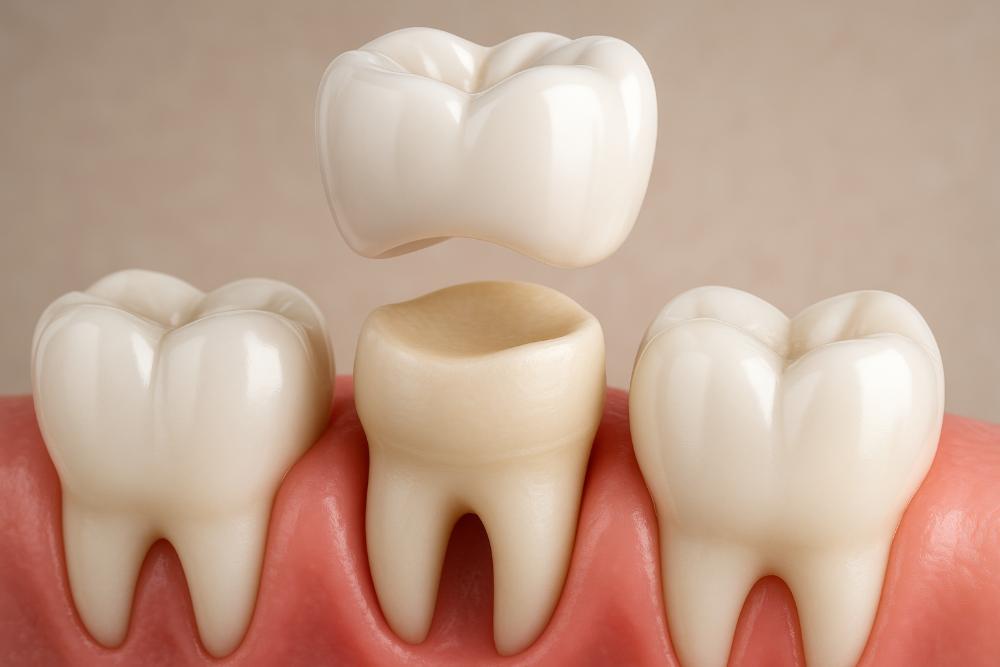
A dental crown is a custom restoration that covers a substantially damaged or weakened tooth. It may be recommended when decay, a large filling, a fracture or previous treatment has left the tooth with insufficient structure for a smaller repair.
Preparing a tooth for a crown requires more extensive treatment than bonding. A controlled amount of tooth structure is removed to create space for the restoration, which is then fabricated to fit the tooth and surrounding bite.
Crowns can restore more than appearance. They can help protect a structurally compromised tooth from the forces of chewing. Ceramic and porcelain-based crowns can also be designed to closely match neighboring teeth in color, shape and translucency.
Dental Crown Vs. Bonding: Key Treatment Differences
The biggest distinction is coverage.
Bonding is localized. Composite resin is added where the tooth needs correction, making it particularly useful for relatively small defects on otherwise healthy teeth.
A crown provides much broader coverage. The restoration surrounds the prepared tooth and is intended to restore a tooth that has lost substantial structure or needs greater protection.
The procedures also differ in how they are completed. Bonding is commonly finished during one appointment because the composite is shaped and cured directly on the tooth. A laboratory-made crown typically involves tooth preparation, a temporary restoration and a subsequent appointment for the final crown.
Durability is another consideration. Bonding can perform well for appropriate cases, but it is generally more vulnerable to chipping and staining than many ceramic restorations. Crowns are often chosen when structural reinforcement is the primary concern, although every restoration has a finite lifespan.
Which Option Looks More Natural?
Both treatments can look natural when they are properly designed. Bonding gives us direct control over small changes in contour and shade. A crown gives the dental laboratory more control over translucency, shape, and surface characterization across the full visible tooth.
For patients considering broader cosmetic changes, we may also discuss other cosmetic dentistry options. The best treatment is not automatically the most extensive one. We look at how much healthy tooth remains and what result can be achieved without unnecessary preparation.
How We Decide Between a Crown and Bonding
We begin with an examination of the tooth, surrounding gum tissue, existing restorations, and bite.
A small enamel chip on an otherwise healthy tooth may be well suited to bonding. A tooth weakened by a large filling, fracture, or extensive decay may need the coverage and reinforcement of a crown.
Cosmetic goals matter too. If only one edge or small surface needs correction, bonding may blend well with the natural tooth. When the entire visible tooth needs a substantial change in form or when strength is a concern, a crown can offer more control.
Frequently Asked Questions
Is bonding cheaper than a dental crown?
Bonding is generally less expensive because it is placed directly and usually requires less treatment time. Exact fees depend on the tooth, extent of repair, and treatment plan.
Can bonding be used instead of a crown after a root canal?
Sometimes a small restoration is appropriate, but many root-canal-treated teeth need greater protection. We assess how much tooth structure remains and how much force the tooth receives before recommending a restoration.
Can a bonded tooth later receive a crown?
Yes. If the tooth later develops more extensive damage or needs stronger coverage, existing bonding can be removed or incorporated into the preparation for a crown when clinically appropriate.
Choose the Right Restoration for Your Tooth
Dental crown vs. bonding is not simply a cosmetic comparison. It is a decision about preserving healthy tooth structure while restoring the strength, function, and appearance you need. Schedule an evaluation with our Midtown Manhattan team so we can examine the tooth and explain which option fits your situation.