
Quick Summary
Yes, you can and should continue professional dental cleanings while wearing braces. Brackets, wires, bands and other orthodontic hardware create additional places for plaque and food debris to collect, making daily hygiene more difficult. Regular cleanings remove hardened buildup that brushing and flossing may miss and give your dentist a chance to check for early signs of cavities or gum problems.
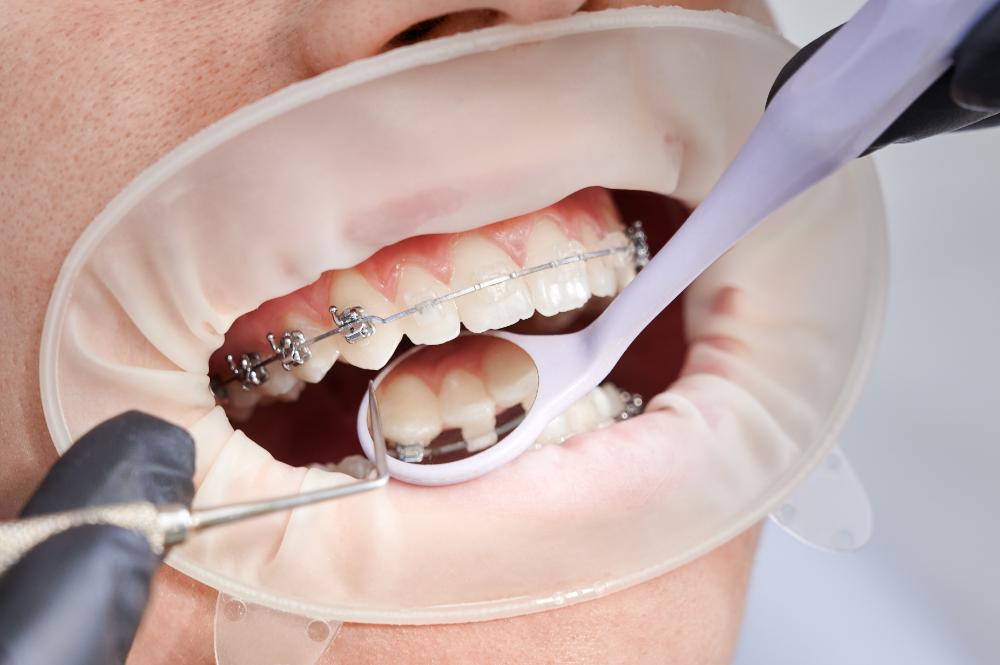
A dental cleaning with braces is performed around the orthodontic appliances rather than waiting until treatment is finished. The braces generally stay in place throughout a routine cleaning, although the technique may take more time and care than it would on an appliance-free smile.
Why Dental Cleanings Matter When You Have Braces
Braces can make everyday brushing and flossing more challenging. Plaque tends to collect around brackets, along the gumline, and between teeth. If it remains in place, it can contribute to cavities, gum inflammation, and visible marks around the brackets.
Professional cleaning removes deposits that home care may miss and complements your orthodontic treatment. It also gives us an opportunity to check the gums and tooth surfaces for early changes that may need attention.
What Happens During a Dental Cleaning With Braces?
The basic purpose remains the same as any professional cleaning: remove plaque and tartar, polish the teeth and assess the gums. The approach is simply adapted to the hardware on your teeth.
A typical appointment may include:
- Examining the teeth and gums: We look for inflammation, plaque accumulation, cavities, areas of enamel demineralization and spots that are difficult to keep clean.
- Removing plaque and tartar: Dental instruments are used carefully around the gumline, brackets and other accessible surfaces.
- Cleaning between teeth: Special techniques and instruments can reach spaces around wires and between brackets.
- Polishing: Exposed tooth surfaces can be polished to remove certain surface deposits and stains.
- Home-care guidance: We can identify problem areas and suggest tools or techniques that make cleaning around your particular braces easier.
Because there are more surfaces to work around, the appointment may take longer than a routine cleaning without braces. Fixed braces typically remain in place.
How Often Should You Get a Cleaning With Braces?
There is no single schedule that works for every orthodontic patient. Many people continue with cleanings approximately every six months, while others benefit from shorter intervals.
More frequent visits may be useful if you have a history of cavities, develop tartar quickly, have persistent gum inflammation or find it difficult to keep the areas around your brackets clean.
Your dental exam is a better guide than a fixed calendar. We can look at how much buildup is accumulating and adjust the cleaning interval when your oral health calls for it.
It is also important to keep your regular dental appointments even if your orthodontist sees you frequently. Orthodontic appointments are not a replacement for comprehensive preventive dental care.
What to Expect After a Cleaning With Braces
Most patients notice that their teeth feel smoother and their mouth feels cleaner after professional care. The brackets and wires remain in their original positions.
If your gums were inflamed before the appointment, they may feel slightly tender after tartar is removed. That sensitivity generally settles as the tissues recover and daily plaque control improves.
Your home-care recommendations may also change as your teeth move. A brush or flossing technique that worked at the beginning of treatment may no longer reach the same areas several months later.
How to Keep Braces Clean Between Visits
Professional cleaning cannot replace daily plaque control. With braces, technique matters as much as frequency.
- Brush at least twice a day with fluoride toothpaste. Angle the brush around the top and bottom edges of each bracket rather than brushing only across the wire.
- Clean between your teeth every day with floss, a floss threader, an interdental brush or another tool recommended for your appliances.
- Pay particular attention to the gumline, where plaque can accumulate even when the brackets look clean.
- Rinse with water after meals when you cannot brush right away.
- Contact your dentist if you notice persistent gum bleeding, swelling, sensitivity or areas that repeatedly collect food.
An interdental brush can make it easier to clean around individual brackets. Some patients prefer a water flosser, while others find a floss threader more effective. The most useful tool is one that fits your orthodontic setup and that you can use consistently.
Do Braces Need to Be Removed for a Dental Cleaning?
Usually, no. Fixed braces are designed to remain on the teeth throughout routine dental care. We can clean around the brackets and wires without removing them.
Occasionally, a particular appliance or area may require coordination with the orthodontic provider. This is more likely when there is unusually heavy buildup, a damaged appliance, or an area that cannot be safely accessed with the hardware in place.
Patients using Invisalign clear aligners can simply remove the trays during the cleaning, giving us direct access to the tooth surfaces.
Can a Dental Cleaning Damage Braces?
Routine professional cleaning should not damage properly bonded brackets or orthodontic wires. Dental professionals adjust their technique around the appliances rather than applying unnecessary force to them.
If a bracket feels loose or a wire becomes displaced after an appointment, let your dental or orthodontic team know. A loose component may need attention from the orthodontist.
Frequently Asked Questions
Can a dental hygienist clean around braces?
Yes. Dental professionals use instruments and techniques that allow them to clean around brackets, wires, and the gumline without removing the braces.
Will a dental cleaning damage my braces?
Routine professional cleaning should not damage properly placed braces. We work carefully around the hardware and avoid unnecessary pressure on brackets and wires.
Can tartar build up around braces?
Yes. Plaque can harden into tartar around brackets and the gumline, and tartar requires professional removal rather than brushing alone.
Schedule a Dental Cleaning During Orthodontic Treatment
Braces make plaque control more demanding, not less important. Regular cleanings help manage buildup while your orthodontic treatment changes the position of your teeth.
Our Midtown Manhattan practice can clean around your braces, assess the health of your teeth and gums, and identify areas that need more attention at home. Keeping preventive appointments throughout orthodontic treatment helps you reach the end of treatment with healthy teeth as well as a straighter smile.