
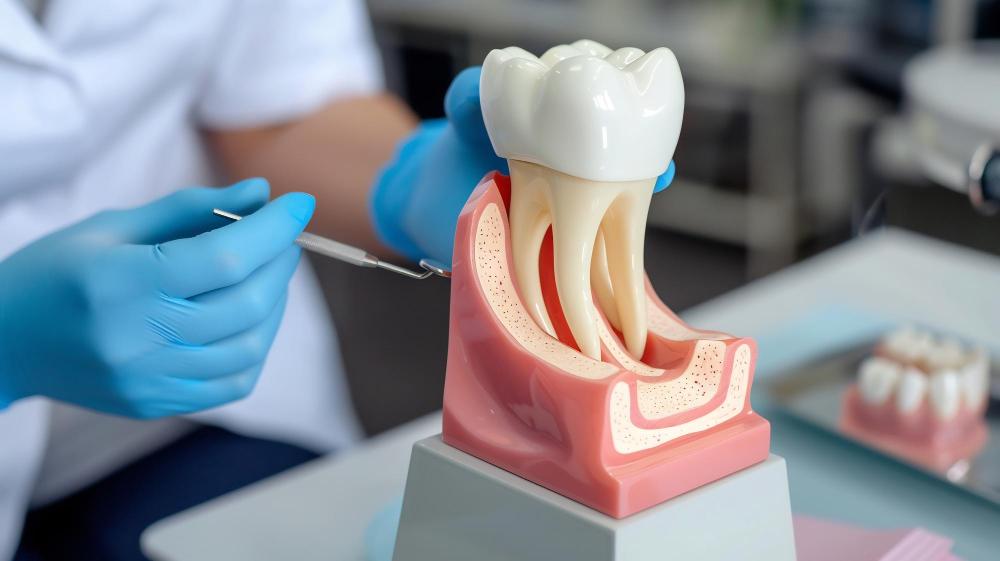
Quick Summary
A non-surgical root canal treatment treats the inside of a damaged tooth through the crown to remove infected tissue. Surgical root canals access the root tip directly through the gums when standard treatments fail. Both procedures eliminate pain and preserve your tooth structure.
Persistent tooth pain often signals a deep infection that requires professional care. A standard non-surgical root canal clears out decay and bacteria from inside the tooth structure. This common tooth infection treatment stops the spread of damage and saves your natural smile from extraction.
At Dr. Alex Rubinov, we deliver exceptional dental care tailored to your specific health goals. Our elite team utilizes advanced diagnostic tools to protect your oral health. Visit our premier dental clinic in New York, NY for top-tier results.
Signs That May Require Root Canal Treatment
Severe, unprovoked tooth pain frequently indicates a major problem within the nerve chamber. You might notice extreme sensitivity to hot and cold foods that lingers long after consumption. Swollen gums, localized tenderness, and tooth discoloration also signal a deep infection.
A dark or pimple-like bump on the gumline near the painful tooth requires immediate evaluation. This bump often leaks fluid, indicating an active abscess. Shifting pain when biting or chewing also shows that the inner tissue needs professional attention.
How Non-Surgical Root Canal Procedures Work
The dentist begins by numbing the area around the target tooth for maximum comfort. A small protective sheet isolates the tooth before the practitioner drills a tiny access hole through the chewing surface. This step opens the path to the pulp.
Specialized instruments remove the diseased tissue and clean the canal system thoroughly. The dentist shapes the empty chambers, fills them with a biocompatible material, and seals the opening. A temporary or permanent restoration finishes the process to prevent reinfection.
Situations That May Need Surgical Treatment
Standard root treatments sometimes fail to clear stubborn bacteria hidden deep inside complex root branches. Severe calcium deposits can also block dental tools from reaching the bottom of the root. In these scenarios, a surgical intervention becomes completely necessary.
Surgeons perform an apicoectomy to access the root tip directly through the surrounding gum tissue. This method allows the doctor to remove infected tissue from the very end of the tooth. They then seal the root tip with a filling.
Recovery Time and Healing Process Differences
Standard non-surgical therapy demands very little downtime for the patient. Most individuals return to their regular daily routines the morning after the procedure. Mild soreness remains common for a few days but yields quickly to over-the-counter pain relievers.
Surgical root procedures require a slightly longer healing period due to the small gum incisions. Patients often experience minor swelling and localized bruising around the treated area. Stitches stay in place for several days, requiring soft foods and gentle cleaning.
Experience Premium Dental Care at Dr. Alex Rubinov
Achieve a healthy smile through advanced general and cosmetic dentistry at Dr. Alex Rubinov. We combine modern techniques with personalized care to perform beautiful smile transformations. Visit our modern dental clinic in New York, NY, for comfortable treatment. Our expert cosmetic dentist in New York, NY, helps you maintain long-term oral health. Let Dr. Alex Rubinov enhance your confidence today.
FAQs
What happens during a standard non-surgical root canal procedure?
First, the dentist numbs the surrounding area to keep you comfortable. Next, a small access hole is created in the top of the tooth so the infected inner tissue can be removed. Once the root canals are thoroughly cleared out and reshaped, the space is filled and sealed with a biocompatible material to protect against future infection.
When does a patient need a surgical root canal option?
A patient needs surgery when standard treatments cannot reach the infection due to calcified canals or complex root shapes. The surgeon cuts through the gum tissue to fix the root tip directly and eliminate persistent, deep-seated bacterial growth.
Is the recovery period painful after a root canal surgery?
Patients feel minor soreness and swelling after surgery, but the discomfort fades within a few days. Following post-care instructions keeps the mouth clean. Over-the-counter medicine manages the temporary ache as the bone and gum tissues mend completely.